

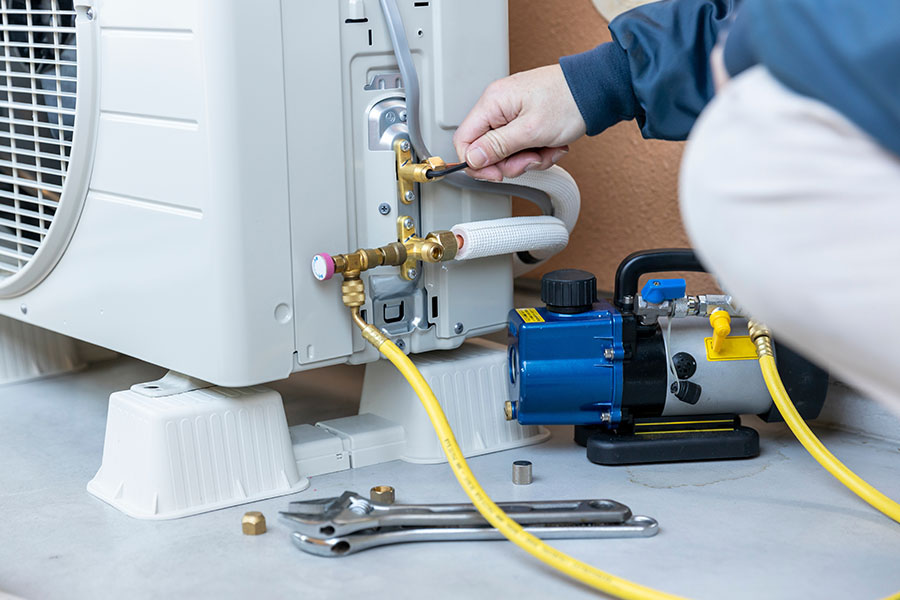
Albuquerque summers place serious demands on residential air conditioning systems. When temperatures in the Heights, the South Valley, and along the I-40 corridor push into the mid-nineties and beyond, a fully functioning AC system is not a luxury. Refrigerant leaks are among the most common reasons cooling performance deteriorates, and they tend to develop gradually, making them easy to overlook until their impact on comfort becomes hard to ignore.
Understanding what refrigerant does, how leaks affect system performance, and what the repair process involves helps Albuquerque homeowners respond quickly and make informed decisions when cooling problems emerge.
Understanding AC Refrigerant and Its Role in Cooling Performance
Refrigerant is the chemical compound that enables an air conditioning system to transfer heat. It circulates between the indoor evaporator coil and the outdoor condenser unit in a continuous cycle, absorbing heat from the indoor air at the evaporator and releasing it to the outdoor air at the condenser. This cycle produces the cooled air that the system distributes through the home’s duct system.
The refrigerant must remain at the manufacturer-determined charge level to complete this heat transfer cycle efficiently. When the charge is correct, the system cools effectively and operates within its designed energy parameters. When the refrigerant is low, the cycle becomes less effective, the system has to run longer to achieve the same result, and energy consumption rises while cooling output falls.
Refrigerant does not deplete through normal operation the way a fuel source does. If levels are low, a leak is always the reason, and the leak must be identified and repaired before the system is recharged. For Albuquerque homeowners experiencing unexplained performance drops, scheduling AC repair is the right first step toward determining whether refrigerant is the issue.
Signs of a Refrigerant Leak in Your AC System
Refrigerant leaks rarely announce themselves dramatically. More often, they develop slowly, with signs emerging gradually over a cooling season. Knowing what to look for enables you to act before the problem compounds.
Common indicators of a refrigerant leak include:
- Declining cooling performance: The system runs, but the home never reaches the set temperature, or rooms that used to cool quickly now take much longer to cool.
- Ice buildup on the evaporator coil or refrigerant lines: When refrigerant levels drop, the evaporator coil can fall below freezing, causing moisture to accumulate and freeze on its surface. Ice on the indoor unit or on the refrigerant lines outside is a clear signal that something is wrong.
- Hissing or bubbling sounds: Refrigerant escaping through a leak point under pressure can produce audible hissing or bubbling. A bubbling sound may indicate that refrigerant is in a liquid state and escaping through a larger breach.
- Oily residue near the unit or line connections: Refrigerant carries compressor oil through the system. Where refrigerant leaks, oil residue often accumulates, leaving a visible oily film on fittings or coil surfaces.
- Unexplained increase in energy bills: A system running longer to compensate for reduced cooling capacity will show up as higher electricity consumption, often before the comfort impact becomes obvious.
Regular professional service through Albuquerque air conditioning services helps identify developing leaks before they reach the point where comfort and efficiency are significantly affected.
How Refrigerant Leaks Impact Your Home’s Comfort
The comfort effects of a refrigerant leak follow a predictable progression. In the early stages, the difference may be subtle: rooms take a bit longer to cool, or the system runs more continuously than before. As the refrigerant level drops further, the impact becomes more pronounced.
Working in homes across Albuquerque, particularly during peak summer weeks when demand on systems is highest, we regularly encounter situations where a slow refrigerant leak has been developing for months before the homeowner realizes it is a system issue rather than a thermostat setting. By the time the indoor temperature is consistently five or more degrees above the set point during afternoon heat, the refrigerant charge may be significantly depleted.
The discomfort compounds in several ways:
- Uneven cooling: Rooms farthest from the air handler or with the most sun exposure tend to show the impact first, creating noticeable temperature variation throughout the home.
- Humidity control failure: Part of an AC system’s function is removing moisture from indoor air. A system struggling with low refrigerant levels loses moisture-removal capacity, making indoor air feel warmer and stickier than the thermometer reading suggests.
- Continuous operation without results: A system that runs constantly but doesn’t cool adequately is both uncomfortable and expensive, and the extended runtime accelerates compressor wear.
Common Causes of Refrigerant Leaks in Albuquerque Homes
Several factors contribute to refrigerant leaks in residential AC systems in the Albuquerque area:
- Age-related wear: Copper refrigerant lines and fittings develop microfractures and pinhole leaks over time, particularly at joints and bends where metal is repeatedly stressed by pressure cycling and thermal expansion.
- Formicary corrosion: A specific type of copper corrosion caused by a reaction between formic acid in the air, moisture, and copper tubing. It is more common in areas with certain VOC exposure and produces small pits in the copper that eventually leak.
- Physical damage: Debris impacting the outdoor unit, lawn equipment contacting refrigerant lines, and pest activity can all cause direct physical damage to refrigerant-carrying components.
- Poor installation: Improper flaring of line connections during original installation or a previous service call creates weak points that eventually leak.
- Vibration fatigue: Compressor vibration transmitted through inadequately supported refrigerant lines can cause metal fatigue at connection points over time.
The dry climate and intense UV exposure in Albuquerque, NM, can accelerate some of these mechanisms, making regular inspection part of a sound maintenance strategy. Scheduled AC maintenance includes leak checks that catch developing issues before they reach a critical stage.
Solutions for Addressing Refrigerant Leaks and Restoring Efficiency
Addressing a refrigerant leak is a multi-step process that begins with diagnosis and ends with verified system performance. A professional technician will:
Locate the leak: Using electronic leak detectors, UV dye, or pressure testing, depending on the system configuration and suspected leak location. Finding the exact source is essential before any repair work begins.
Repair the leak point: Depending on the location and severity, this may involve brazing a pinhole in a copper line, replacing a leaking fitting or valve, or, in cases of significant coil damage, replacing the affected coil assembly.
Pressure test the system: After repairs, the system is pressurized and checked to confirm the leak has been fully resolved before refrigerant is added.
Recharge the system: Once the repair is verified, refrigerant is added to the manufacturer’s specified charge level using calibrated equipment. Overcharging is as problematic as undercharging and must be avoided.
Performance verification: The technician confirms the system is producing the correct temperature differential across the evaporator coil and that pressures are within normal operating range before the job is considered complete.
For systems where the leak is found in the evaporator coil and repair is not cost-effective given the coil’s age and condition, a new AC installation in Albuquerque, NM, may be the more practical long-term solution, particularly if the system is approaching the end of its design service life.
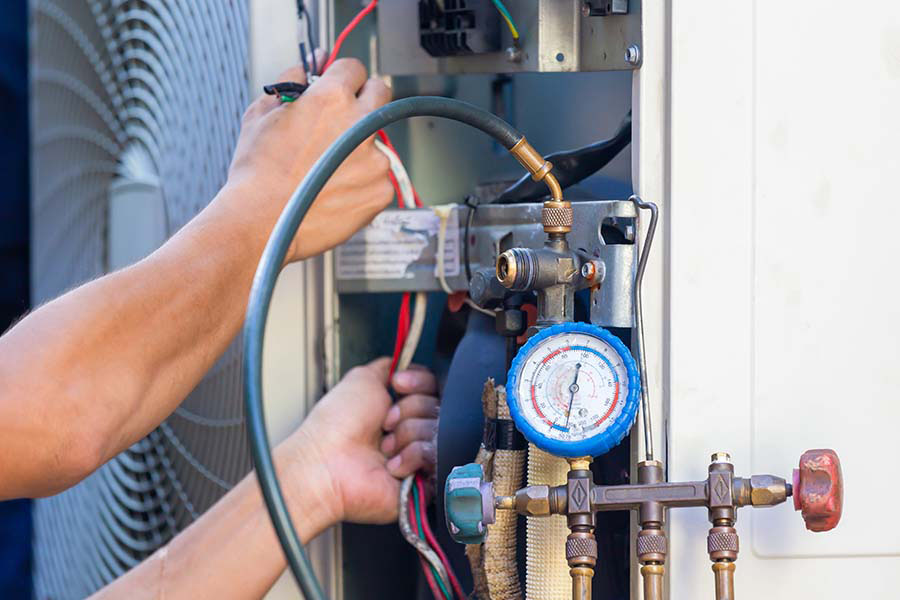
Keeping Albuquerque Cool, One Honest Fix at a Time
A refrigerant leak left unaddressed does not stay small. As it progresses, the comfort impact grows, the system works harder and wears faster, and what might have been a straightforward repair becomes a more significant problem. Albuquerque, NM homeowners who catch the early signs and act on them consistently get better outcomes at lower cost.
Pen Pals Cooling Heating Plumbing provides honest diagnostics, precise repairs, and transparent pricing on every service call. If your AC system has been underperforming this summer, schedule your AC service today and let our certified technicians find out exactly what is going on.